Complacency and the Perception of Risk
Introduction
On January 7, 2020, what was supposed to be an exhilarating heli-ski adventure turned into a devastating accident on Monte Miravidi, La Thuile (AO), Italy. The AS350 B3 helicopter, registered as I-AMVV, took off with a group of skiers, only for tragedy to strike moments later. A ski instructor, acting as a task specialist, accidentally got caught on the helicopter’s utility basket and was lifted into the air. Within seconds, he fell to the ground, suffering fatal injuries. The Italian National Agency for Flight Safety (ANSV) conducted an in-depth investigation into the incident, uncovering a series of factors that contributed to the tragic event.
The Mission and the Flight
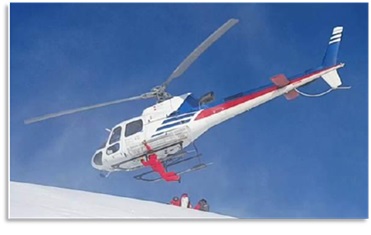
The flight was part of a heli-ski operation—a popular but high-risk adventure sport where helicopters transport skiers to remote mountain peaks. On that day, the helicopter was conducting multiple trips, ferrying groups of skiers from the Colle del Piccolo San Bernardo, to Monte Miravidi. The pilot was experienced, holding all necessary qualifications, and the helicopter itself was in excellent working condition.
The accident occurred during the second flight of the day. After disembarking three skiers and the ski instructor, the helicopter prepared to take off. The ski instructor, who was responsible for managing passenger embarkation and disembarkation, remained standing near the aircraft. As the helicopter lifted off, his right sleeve became entangled in the metal hook of the utility basket. Within moments, he was dragged into the air before falling to the rocky terrain below. The incident unfolded so quickly that neither the pilot, nor the task specialist on board, could react in time to prevent the fall.
Key Findings from the Investigation
The ANSV’s investigation aimed to determine the causes of the accident and recommend measures to prevent similar incidents. The final report identified several critical findings.
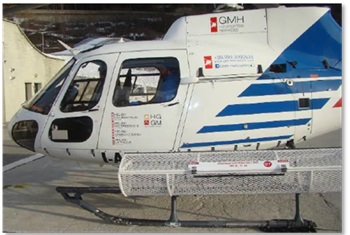
The AS350 B3 helicopter is designed with limited visibility on its left side, where the utility basket was installed. The pilot, seated on the right side, had no direct view of the area where the skiers and task specialist were positioned. Although the helicopter was equipped with cargo mirrors for enhanced visibility on the right, no such system was in place for the left side.
The pilot and the task specialist inside the helicopter had an unclear understanding of each other’s roles in ensuring that ground personnel were sitting/kneeling at a safe distance from the aircraft before take-off. The phrase “Vai” [Italian for “Go”] was used by the task specialist, but it was not an official command within the company’s operational manual. The pilot mistakenly assumed this meant all ground personnel were safely positioned.
The utility basket, capable of transporting a payload of maximum 91 kgs, was installed on the left side of the aircraft. It is not a standard Airbus product but was produced by an independent company. It had a protruding metal linkage as part of its locking mechanism. It is assumed that this part became the unintended point of entanglement for the ski instructor’s sleeve, ultimately leading to his fall. ANSV noted that such protrusions pose a hazard for personnel working around the aircraft.
While both the pilot and the task specialist had undergone Crew Resource Management [CRM] training, the investigation revealed a failure in effectively applying CRM principles. There was also a lack of clarity regarding the responsibilities of the task specialist on board versus the one on the ground, leading to confusion in crucial moments before take-off.
The Role of Weather and Terrain
Weather conditions were deemed to be generally favourable for the flight, with clear skies and good visibility. However, strong winds at Monte Miravidi, ranging from 10 to 30 knots, with gusts up to 43 knots, played a role in the take-off dynamics. The wind direction required the helicopter to take off toward the northwest, and the French side of the mountain, where the fatal fall ultimately occurred.
The Safety Recommendations
Following the investigation, ANSV issued two key safety recommendations.
“The event may have been influenced by complacency […] that may have reduced the perception of the risk”
ANSV recommended that Airbus Helicopters develop and install enhanced retro-vision systems to give pilots a clearer view of the left side of the helicopter, particularly in single-pilot operations like heli-ski flights. The Bureau d’Enquêtes et d’Analyses (BEA), the French aviation safety authority, disagreed with this recommendation, arguing that Airbus was not responsible for modifications related to third-party-installed equipment, such as the utility basket.
The investigation concluded that the protruding linkage on the utility basket was a hazard. ANSV recommended that the manufacturer of the basket, redesign the locking mechanism to eliminate such protrusions and reduce the risk of accidental entanglements.
Lessons for the Aviation and Heli-ski Industry
The I-AMVV accident underscores the inherent risks in heli-ski operations, where personnel frequently operate near helicopters in high-altitude environments. Key takeaways from this investigation include the need for strict adherence to embarkation and disembarkation protocols. Ground personnel must be positioned safely before take-off, with clear visual confirmation from the pilot. Improved communication procedures should be in place, and standardized phraseology should be used to confirm when it is safe to take off, preventing misunderstandings. Enhanced cockpit visibility should be implemented to provide pilots with better awareness of ground personnel. Equipment safety checks should be enforced to ensure utility baskets and other external attachments are designed with safety considerations to prevent unintended hazards.
Conclusion
The I-AMVV helicopter accident was a tragic reminder of the small yet significant factors that can lead to fatal outcomes in aviation. While the pilot and crew were experienced, lapses in communication, visibility limitations, and an unforeseen equipment hazard contributed to the accident. A degree of complacency “generated by the considerable frequency and repetitiveness of the […] operations […] may have reduced the perception of the risks”. The recommendations from ANSV aim to improve safety standards in aerial operations, particularly for specialized missions like heli-skiing. As the aviation industry continues to evolve, safety investigations like this serve as valuable learning tools. By addressing the identified risks, operators can help prevent similar tragedies in the future and ensure that the thrill of heli-skiing remains as safe as possible for adventurers and aviation professionals alike. Moreover, they further emphasise the importance of adhering to laid-down procedures which, themselves, have developed through previous experience and best practices: “the embarkation and disembarkation procedures, if properly applied and executed, do not allow for any entanglement of clothing with parts of the helicopter to actually pose a hazard to operations”.
Read the full report here:
https://ansv.it/wp-content/uploads/2022/12/Final-Report-I-AMVV.pdf
.