“Notice, Understand, and Think Ahead”, a Vital Concept in Aviation
On August 28, 2021, at Glasgow Airport, a Cessna was preparing for a routine introductory air experience tour, with two passengers on board. The aircraft was a Reims Cessna F172N aircraft, registered as G-BGIY, piloted by a 53-year-old private pilot with over 564 hours of flying experience, 451 of which were on the same aircraft type. Although the resulting incident proved no injuries or damage to the aircraft, it serves as a valuable case study for understanding how distractions, and lapses in ground procedures, can lead to potentially hazardous situations.
The incident began innocuously enough. The pilot arrived at the aircraft and noticed that the towbar, used for manoeuvring the aircraft on the apron, was still attached to the nosewheel. He expressed surprise to the passengers and intended to remove the towbar once he finished his pre-flight inspection. However, as he conducted the walk-around inspection, he became distracted by a question from one of the passengers. This momentary lapse in focus led to the towbar being left attached to the aircraft as it departed from The incident began innocuously enough. The pilot arrived at the aircraft and noticed that the towbar, used for manoeuvring the aircraft on the apron, was still attached to the nosewheel. He expressed surprise to the passengers and intended to remove the towbar once he finished his pre-flight inspection. However, as he conducted the walk-around inspection, he became distracted by a question from one of the passengers. This momentary lapse in focus led to the towbar being left attached to the aircraft as it departed from Runway 23 for a short flight in the local area.
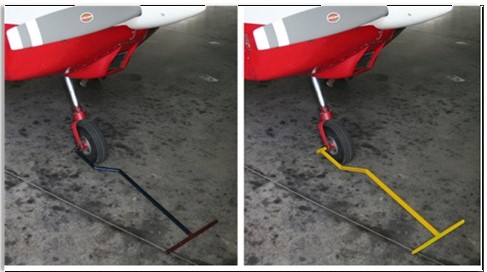
During the flight, the pilot did not perceive anything unusual. It was only upon returning to the airport that air traffic control relayed a message from an airport operations vehicle, alerting the pilot that something was attached to the aircraft’s nosewheel. The pilot immediately realized it was the towbar. He landed the aircraft slowly and safely, vacated the runway, and removed the towbar. Fortunately, there was no damage to the aircraft, or the towbar, and all on board were unharmed.
This incident highlights the critical role of threat and error management in aviation safety. The report emphasizes the importance of prioritizing actions related to unexpected or novel circumstances, as these are less likely to be addressed by existing checklists and procedures. Using the industry tool “Notice, Understand, and Think Ahead” (NUTA), the report analyses the pilot’s actions, and identifies areas for improvement. The pilot had “noticed” the towbar and “understood” the threat it posed, but he did not progress to the “thinking ahead” stage, which involves specifying actions to mitigate the risk. For instance, removing the towbar first, or creating a conspicuous reminder to remove it later, could have prevented the occurrence.
The report also delves into the role of passenger management in aviation safety. The pilot recognized the potential for distraction and discussed the importance of the walk-around and ground checks with the passengers. However, the distraction caused by answering a passenger’s question during the inspection ultimately led to the oversight. The Civil Aviation Authority (CAA) provides guidance on managing passengers, pointing out: “Consider leaving the passengers in a safe and comfortable place, such as the aerodrome clubhouse, while performing the pre-flight inspection or refuelling. This will allow you to concentrate on making sure the aircraft is ready for the flight.” This advice underscores the need for pilots to establish a “sterile” phase during pre-flight inspections, where they can focus solely on ensuring the aircraft’s readiness without external interruptions.
The operator of the aircraft took immediate steps to address the issue and prevent similar incidents in the future. Towbars, which were already painted bright red, were further enhanced with reflective tape to increase their visibility. Additionally, the operator implemented a new procedure requiring anyone using a towbar to keep their hand on it continuously while it is attached to the aircraft, only letting go once the towbar has been removed. The operator also mandated that its members attend an in-house safety seminar to learn from the incident and improve their understanding of threat and error management.
“‘Thinking ahead’ could include designating the walk around as a ‘sterile’ phase of flight or performing it without passengers present”
This incident is not an isolated case. The report references a similar event that occurred on August 7, 2019, when a Cessna P210N departed from Southend Airport with a towbar attached. In that case, the pilot had been distracted by a stressful event earlier in the day, highlighting how external factors can impact a pilot’s focus and decision-making. Following that incident, the CAA took action to promote the importance of increasing the visibility of ground equipment in the general aviation environment. The lessons learned from these incidents emphasize the need for vigilance and proactive measures to mitigate risks during ground procedures. A very similar incident has already been discussed, and is available on the BAAI website:
https://baai.gov.mt/a-culmination-of-many-little-events/
The concept of a “sterile flight deck,” as described by the European Union Aviation Safety Agency (EASA), is particularly relevant in this context. EASA defines sterile flight deck operations as “any period of time when the flight crew members shall not be disturbed… except for matters critical to the safe operation of the aircraft and/or the safety of the occupants.” While this concept is typically applied during critical phases of flight, it can also be extended to pre-flight inspections. By designating the walk-around as a sterile phase, pilots can minimize distractions and focus entirely on ensuring the aircraft is ready for departure.
The incident also highlights the importance of situational awareness in aviation. The NUTA framework provides a useful lens through which to analyse the pilot’s actions. While the pilot demonstrated awareness of the towbar and the potential distraction posed by the passengers, he did not take proactive steps to address these threats effectively. This underscores the need for pilots to not only notice and understand potential risks, but also to think ahead and implement measures to mitigate them.
The G-BGIY incident serves as a reminder of the importance of threat and error management in aviation. While the outcome was fortunate, with no injuries or damage, the event highlights the need for pilots to prioritize actions related to unexpected circumstances, manage passenger interactions effectively, and maintain situational awareness. The operator’s response to the incident, including enhancing the visibility of towbars and implementing new procedures, demonstrates a commitment to continuous improvement in safety practices. As the report states, “Prioritizing actions relating to unexpected or novel circumstances can be beneficial because those are less likely to be trapped by existing checklists and procedures.” By learning from such incidents and adopting proactive measures, the aviation community can continue to enhance safety, and prevent similar occurrences in the future.
Read the whole AAIB report here:
https://assets.publishing.service.gov.uk/media/6257dbd48fa8f54a935a27f4/Reims_Cessna_F172N_G-BGIY_04-22.pdf