
Killed Rushing to Get to Killrush
On a clear December afternoon, an experienced private helicopter pilot set out on a familiar journey across Ireland. Less than an hour later, he was flying above a landscape hidden by fog, with daylight fading, and fuel diminishing. The tragedy that followed reveals how ordinary human expectations can become powerful influences, even when circumstances have changed.
The witnesses in Kennycourt, County Kildare, heard the helicopter before they could properly see it. For several minutes, it moved back and forth above the countryside, sometimes disappearing into low cloud, sometimes briefly emerging beneath it. One witness described it as “going over and back”; another recalled it “circling”. To someone watching from the ground, the aircraft’s movements must have seemed puzzling.
Inside the Robinson R44, its 71-year-old pilot was alone. What he was thinking during those final minutes cannot be known. But the flight path, the weather, and the circumstances reconstructed by investigators tell a story of a journey that became increasingly more difficult to complete.
On 11 December 2022, the pilot had departed Ballygarrett, County Wexford, and flew to Tagoat, near Rosslare. His intention was to continue to Kilrush Airfield in County Kildare, refuel there, and return to Ballygarrett before sunset.
At Tagoat, the weather offered little immediate reason for concern. Met Éireann subsequently described conditions as “clear and dry with crisp winter sunshine”, so much so, that photographs showed a blue sky. Moreover, the helicopter appeared to be operating normally.
The pilot had flown to Kilrush many times before. He held a valid licence, had passed a proficiency check earlier that year, and had accumulated 316 flying hours. Family members told investigators that he habitually checked weather forecasts, and would not fly unless conditions were suitable.
His radio communications were calm and professional. At 14:58, he announced that he was “lifting out of Rosslare for Kilrush Airfield”. It was an ordinary departure, towards a familiar destination. Yet the weather ahead was markedly different. Across parts of Carlow and Kildare, fog and low cloud obscured the countryside. Above the cloud, the sky could be clear; beneath it, visibility was sometimes severely restricted. This contrast plays a good part, since a pilot can leave in sunshine, continue under blue skies, and still find the destination hidden below. The world ahead may look inviting, even while the essential visual connection with the ground gradually disappears.
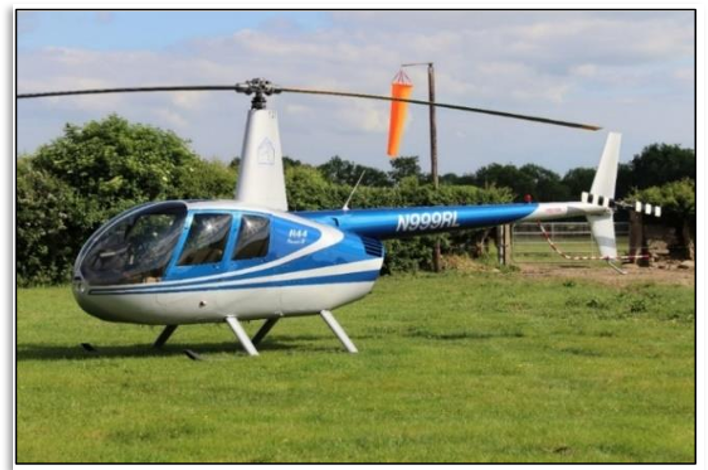
At approximately 15:32, the helicopter reached the vicinity of Kilrush. Instead of landing, it turned and continued north-east, passing directly over the airfield at around 1,800 feet. Investigators considered it likely that poor visibility prevented the pilot from seeing the airfield sufficiently to land. In fact, he continued beyond it, perhaps searching for somewhere to break through cloud
There is something particularly human about this moment. The destination was close; the journey had already been made; and the airfield was tantalisingly familiar. Somewhere beneath the cloud lay the place where the pilot expected to refuel. Turning away from a nearly completed task can be psychologically harder than abandoning it much earlier.
The investigation identified this tendency as plan continuation bias, an unconscious inclination to persist with an original plan, even when changing circumstances suggest that another course of action is called for. This is not simply stubbornness; it is a feature of how people make decisions. Familiarity can create confidence. Time already invested can make an alternative seem less attractive, while a destination almost reached can exert a stronger pull than one still far away.
In this case, the pilot also had practical considerations. He intended to return before sunset, scheduled for 16:10. Fuel was diminishing, although investigators could not establish precisely how much remained. Each passing minute reduced his options, or may have made them appear to be narrowing. The helicopter then began flying back and forth around Kennycourt. Radar recorded changes in direction, speed and altitude. At one point, its speed fell dramatically as it descended towards the cloud. Although we will never know for sure, investigators believed these movements were consistent with attempts to find a clearer view of the ground, perhaps to land in a field, or approach Kilrush from a lower altitude.
For the pilot, the task was becoming more demanding. Flying a helicopter requires continuous attention, and poor visibility removes the outside references that help a pilot maintain orientation. Searching for somewhere to land, monitoring fuel, and remaining aware of approaching darkness would have added to that workload.
The witnesses’ accounts offer a glimpse of the difficulty. One saw the helicopter briefly emerge below cloud before climbing again. Another thought it was preparing to land, only to watch it climb “nose straight up” into cloud. The investigation could not establish the pilot’s precise intentions; although the repeated climbs and descents suggest that the problem was no longer simply reaching Kilrush. It might have been finding a safe way down.
“The Pilot may have felt increasing pressure to land or get to his planned destination”
There was another danger, less obvious than the fog itself. Without a reliable view of the outside world, a pilot’s senses can become misleading, and the body may suggest that an aircraft is level when it is actually turning, or descending. This is known as spatial disorientation, and it can develop frighteningly quickly.
At approximately 15:45, the helicopter descended steeply into an agricultural field near Kennycourt. The pilot was fatally injured, and the aircraft destroyed by the impact and subsequent fire.
The AAIU concluded that the probable cause was loss of control following spatial disorientation during an attempted, or abandoned descent, in poor visibility. Plan continuation bias was identified as a contributory cause, with decreasing fuel possibly adding pressure.
The report does not portray a reckless man deliberately ignoring danger. It describes circumstances in which a familiar plan, initially reasonable expectations, and a succession of changing conditions may have combined to make alternative decisions increasingly difficult. Its safety recommendation called for greater awareness of plan continuation bias, and ways to counter it.
The wider significance lies in the ordinary nature of the pressures involved. People become committed to plans. Familiar routes inspire confidence. Approaching deadlines alter how choices are perceived. None of these tendencies is unusual, and none requires a dramatic error of judgement.
On that December afternoon, the distance remaining to Kilrush was small. However, the difference between being close to a destination, and being able to reach it safely, had become immense.
Read the whole AAIU report here:
https://aaiu.ie/wp-content/uploads/2024/08/Report-2024-007.pdf