
Crew Coordination Gone Wrong? EMAS Proves its Worth
NOTE: This article is derived from a preliminary report, which explicitly states, “This information is preliminary and subject to change”. The Final Report is anticipated.
On the night of 24 September 2025, a routine regional flight from Washington Dulles to Roanoke, Virginia, became an unexpected lesson in how quickly weather, timing, and human decision-making can converge in aviation. According to a National Transportation Safety Board (NTSB) preliminary report released on 28 October 2025, CommuteAir Flight 4339, operating as United Express and flown by an Embraer EMB-145XR, overran the end of runway 34 at Roanoke-Blacksburg Regional Airport.
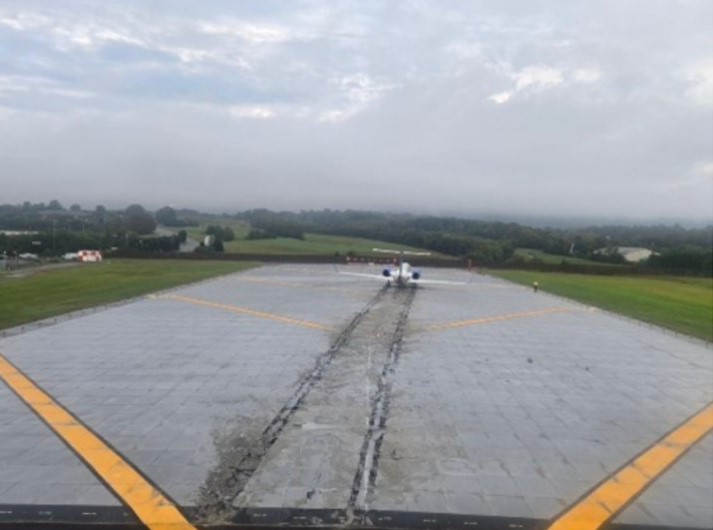
The 53 people on board, three crew members and 50 passengers, escaped uninjured. The aircraft came to rest safely in the airport’s engineered materials arresting system (EMAS), a bed of crushable concrete designed to stop planes that go beyond the runway. There was no fire, and only minor damage to the airplane.
Even though the NTSB emphases that “this information is preliminary and subject to change,” the report paints a vivid picture of how a normal landing sequence unravelled in the final seconds.
A Day That Would Not Stay on Schedule
The crew’s day began with delays. As the report notes, “Prior to departure, the airplane had to be deplaned twice for maintenance related anomalies.” After passengers boarded for a third time, the flight finally left Dulles more than two hours behind schedule. The weather briefing for Roanoke appeared benign, “calm winds, no precipitation, a cloud ceiling of 15,000 feet, and runway 6 in use”, according to the Automatic Terminal Information Service (ATIS).
But skies can change quickly in the Blue Ridge Mountains. During descent, air traffic controllers told the crew that “precipitation [was] along the approach path to runway 6 and that other aircraft were using runway 34 for landing.” The captain switched plans, asking the first officer to prepare for an instrument landing system (ILS) approach to Runway 34 instead.
Heavier rain began to fall as the aircraft approached landing phase. The report describes how the First Officer (FO), serving as pilot monitoring, ran the numbers for a slippery runway, “The FO ran the performance calculations and determined that they would have a margin of approximately 200 feet more than was required, without thrust reverser usage.”
Calls for a Go-Around
As the aircraft descended toward the runway lights, the weather deteriorated further. The report notes, “rain intensity increased, and the captain requested windshield wipers at high.” The FO realized they were coming in high, meaning the plane was still above the ideal glide path, and voiced his concern.
“After crossing the runway markings, the FO called for a go-around, but the captain continued,” the report states. “About halfway down the runway, the FO called for a go-around a second time, but the captain continued.”
Those sentences are among the most striking in the preliminary report. In aviation, a go-around is a standard, safe manoeuvre — allowing a second chance to a landing when conditions are not right the first time round. The captain’s decision to continue may draw scrutiny as investigators study the human-factors element of the event.
Moments later, the aircraft touched down. “The flight crew applied maximum braking and deployed the engine thrust reversers”, but the wet surface coupled with the late touchdown left little room to stop. The plane slid off the end of the runway and into the EMAS.
Safety Systems and Swift Response
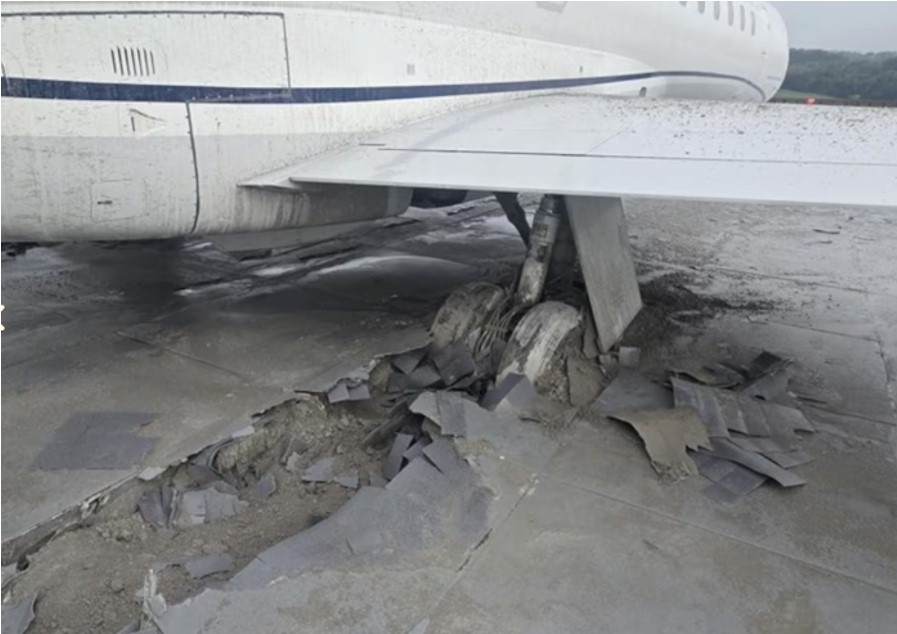
The arresting system did exactly what it was designed to do. Airport photos included in the report show “airplane main landing gear witness marks in the EMAS at ROA.” Within moments, emergency crews were on scene. The report recounts how the FO attempted to communicate with air traffic control, but “the communications button had disengaged.” Once contact was re-established, the crew coordinated with the flight attendant, who confirmed there were “no injuries.”
Emergency responders climbed aboard and helped passengers exit “down a ladder”, the report adds.
While the event caused little physical harm, it triggered a detailed investigation. The NTSB brought together specialists in flight data, meteorology, air traffic control, and human factors. Representatives from the Federal Aviation Administration, CommuteAir, the Air Line Pilots Association (ALPA), and Embraer joined as official parties to the inquiry. Brazil’s CENIPA, the country’s aviation accident authority, also sent an accredited representative, reflecting the jet’s Brazilian origin.
As the NTSB noted, the flight data and cockpit voice recorders were sent to Washington, D.C., for analysis. That data will likely clarify the sequence of cockpit decisions in those crucial final moments.
A Reminder of Aviation’s Fragile Margins
Even though this was not a crash — no injuries, no fire, and the aircraft remained largely intact — the report serves as a sobering reminder of how fast-changing weather, human decision-making, and runway conditions can align to create risk.
The NTSB will continue investigating, but the preliminary facts already hint at key lessons: how the perception of “calm winds” and “no precipitation” earlier in the flight may have influenced cockpit expectations, how delays and fatigue might have played a role, and how standard safety features, such as EMAS, provide a crucial layer of protection.
It is telling that, despite the complexity of modern air travel, the report closes with a simple sentence that underscores aviation’s collaborative spirit: “The investigation is ongoing”. Behind that phrase lies a meticulous process — thousands of hours of analysis dedicated to ensuring that one night’s near-miss leads to safer skies for everyone.
Read the Preliminary NTSB report here:
https://data.ntsb.gov/carol-repgen/api/Aviation/ReportMain/GenerateNewestReport/201709/pdf