Subtle Changes That Could Go Unnoticed
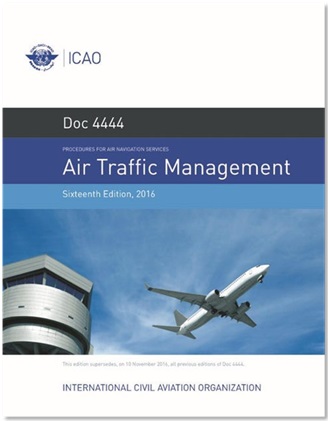
Published in 2016, ICAO Document 4444, Procedures for Air Navigation Services (PANS) – Air Traffic Management, is now in its sixteenth edition. This essential document dictates the actual procedures to be applied by air traffic services units in providing control to civil aviation.
Throughout successive iterations, the International Civil Aviation Organisation includes amendments to procedures which, for some reason, are subsequently found to require “tweaking”. In recent years, aviation phraseology has been revisited, also in line with recommendations from investigations into reported aviation incidents.
In 2007, ICAO officially changed standard phraseology from “AFFIRMATIVE” to “AFFIRM”. This modest change reflects a broader trend towards reducing redundant or complicated language in aviation communications in an effort to improve safety, and minimize miscommunications in high-stress, time-sensitive situations.
Having the same suffix, phonetic similarities between words, such as “AFFIRMATIVE” and “NEGATIVE” could easily lead to misinterpretation especially in noisy or unclear communication conditions.
The change to “AFFIRM” was made official with the fifth edition of ICAO Doc 4444, and became part of the international aviation regulations and training guidelines for pilots and air traffic controllers.
“NEGATIVE” remains unchanged, but its use was emphasized for clear negative responses, particularly to avoid ambiguity in situations where the two terms (affirmATIVE and negATIVE) could be confused.
The 2007 edition of ICAO Doc 4444 introduced several other important changes to air traffic control (ATC) and pilot communication phraseology to improve clarity, reduce misunderstandings, and standardise international communication. In addition to the change from “AFFIRMATIVE” to “AFFIRM”, several other changes were made to streamline phraseology, enhance efficiency by shortening the response time in radio exchanges, and reduce the likelihood of miscommunication.
Other noteworthy changes concern standardised phraseology for numbers and time to avoid misunderstandings, especially over radio where communication clarity is paramount.
The phrase “ROGER” continues to be used as a way of acknowledging a message, however it was also clarified in its usage to ensure it is understood only as “received”, rather than as an affirmative response. “WILCO” (an amalgamation of “WILl COmply”) was emphasized as the standard confirmation for a pilot’s agreement to follow an ATC instruction. The difference between “ROGER” and “WILCO” was emphasised as the former only serves as acknowledgment of received instructions, but does not confirm that the instructions would be followed. This helped avoid confusion about whether the pilot intended to comply, or merely indicated receipt of the message.
The phrase “CANCEL” was introduced in specific operational contexts, such as cancelling a clearance or a previous instruction, to make sure there is no confusion when an action needs to be called off.
There were revisions in how the phrases “STAND BY” and “HOLD POSITION” were used. “STAND BY” was standardized for use when air traffic control asks a pilot to hold on the radio while waiting for further instructions. “HOLD POSITION” was specified for use when pilots are asked to hold their physical position, such as on a runway or taxiway, and this phrase was clarified in its use to prevent confusion with other types of holding instructions.
The same edition also brought about the end of the abused item of phraseology “GO AHEAD”. The use of this phrase was considered ambiguous and imprecise, and could potentially lead to confusion, particularly in critical situations where clarity and precision are crucial. The phrase was used in air traffic communication to indicate approval to proceed with a transmission or request. However, its meaning could be misinterpreted, especially when the context of the instruction was not clear, or the wording not precise enough.
To replace “GO AHEAD”, ICAO recommended more specific, clearer phrases such as “PROCEED” for moving forward with a clear instruction towards a specified Clearance Limit, “CLEARED” for situations where an action, such as a route change, landing or take-off is authorized, and “AUTHORIZED” for specific permissions to carry out an action.
When, for some reason, a pilot’s transmission has been interrupted, the controller is to prompt further communication by simply reading the aircraft’s callsign.