Total decolour ... esta liberado (Total took off ... runway free)
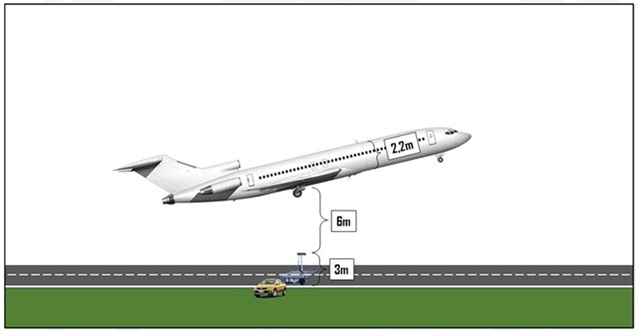
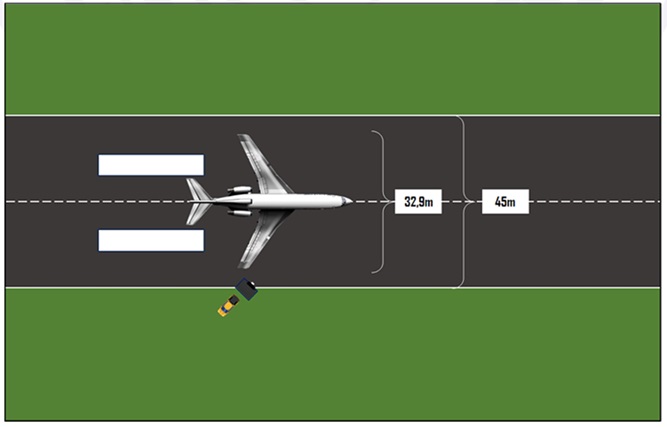
On July 24 2024, a serious aviation incident occurred at Afonso Pena Airport in Curitiba, Brazil, involving a Boeing 727-2M7 cargo aircraft operated by Total Linhas Aéreas. The incident, classified as a Runway Incursion, unfolded during the aircraft’s take-off roll on runway 15. A vehicle towing a lighting tower entered the runway without authorization, coming dangerously close to the aircraft. The right wing of the plane passed within six meters of the lighting tower, narrowly avoiding a catastrophic collision. Fortunately, no injuries or damage were reported, but the event highlighted significant lapses in operational safety and communication.
The aircraft was on a routine cargo flight from Curitiba to São Paulo, with four crew members on board. The weather conditions were favourable, and the aircraft was in compliance with all operational and maintenance requirements. However, during the critical moments of take-off, the vehicle towing the lighting tower entered the runway from the opposite end, creating a high-risk situation. The lighting tower was being transported for ongoing construction work on the runway, which involved levelling and widening the prepared strip.
“Over time, oversight diminished.
Original qualified personnel were replaced by less trained staff, lacking radio communication and clear authority.”
The investigation revealed a series of failures that contributed to the incident. One of the primary issues was a lack of attention and vigilance by the air traffic controller on duty. Although the controller conducted a visual scan of the runway before authorizing the aircraft’s take-off, the vehicle entering the protected area was not captured. This lapse in situational awareness meant that no corrective actions were taken to prevent the vehicle from accessing the runway.
Communication breakdowns also played a critical role. A message sent by a ground operations supervisor to the construction team was misinterpreted. The message, intended to indicate that the runway would be “free” after the aircraft’s departure, was understood as confirmation that the runway had already been vacated. This misunderstanding led the vehicle driver to proceed onto the runway prematurely. Compounding the issue, the driver lacked the necessary training and authorisation to operate in the airport’s operational area. The individual was unfamiliar with the risks and procedures associated with such environments, and this lack of awareness further escalated the danger. Prior to the incident, other dangerous situations had been observed, including a worker being inadvertently left on the runway or rushed verbal commands from supervisors during active flight operations.
The organisational culture surrounding the construction project also contributed to the incident. The construction team, under pressure to meet deadlines after delays and interruptions, had adopted informal practices that deviated from established safety protocols. These included using mobile phones instead of radios for communication, employing unqualified drivers, and entering the runway outside the authorised time frame. The lack of proper supervision and adherence to safety procedures created an environment where such lapses, unfortunately, became routine.
The airport’s Safety Management System (SMS) and risk management procedures, while formally in place, were not effectively implemented. The approved risk mitigation measures, outlined in the airport’s safety documentation, were either ignored or inadequately enforced. For instance, daily safety briefings, which were meant to ensure that all personnel were aware of the risks and procedures, were not consistently conducted. Additionally, the absence of a formal operational agreement between the airport operator and the air traffic control tower further weakened the coordination and oversight of activities on the runway.
In the aftermath of the incident, several corrective actions were implemented to address the identified shortcomings. Access to the runway was restricted, and the use of radios for communication was made mandatory for all personnel involved in construction activities. Daily safety briefings were reinstated, and stricter supervision measures were introduced. The airport operator and the air traffic control tower also worked together to develop a formal operational agreement to ensure better coordination in the future.
The incident was classified as a Category A runway incursion, the most severe level, indicating that a collision was narrowly avoided.
This near-miss highlights the complex interplay of human, organizational, and procedural factors in aviation safety. While the absence of injuries or damage may suggest a fortunate outcome, the incident exposed vulnerabilities that could have led to a disaster. It underscores the need for a proactive approach to safety management, where risks are not only identified, but also effectively mitigated through rigorous implementation of procedures coupled with continuous oversight.
Read the whole CENIPA report [in Spanish] here:
https://sistema.cenipa.fab.mil.br/cenipa/paginas/relatorios/rf/pt/PR_TTO_24_07_2024_PUB..pdf